Research
Inborn Errors of Metabolism (IEM)
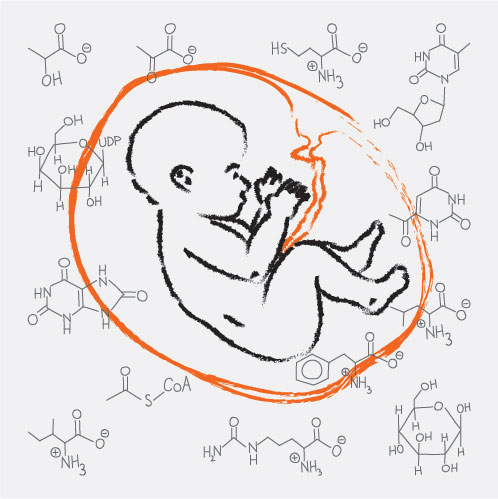
More than 1,200 rare, inherited metabolic diseases are collectively known as inborn errors of metabolism (IEM). These include defects in amino acid (e.g., PKU, AKU, MSUD, urea cycle disorders), carbohydrate (e.g., galactosemia, glycogen storage disease), fatty acid (e.g., VLCAD, MCAD, SCAD), and energy (e.g., PDCD, mitochondrial electron transport chain dysfunction) metabolism. Despite their prevalence, the pathophysiology and effective therapies for the majority of IEM remain poorly understood.
IEM are monogenic disorders caused by deficient or inactive metabolic enzymes, often resulting in the toxic accumulation and/or deprivation of metabolites proximal to the blocked enzymatic reaction. Our research aims to (a) elucidate how loss of enzyme function leads to disease pathology using cell-culture models and model organisms, (b) develop innovative strategies—chemical, enzyme-based, or genetic—to restore metabolic homeostasis, and (c) evaluate the therapeutic potential of these interventions.
As part of this effort, we are currently investigating the therapeutic benefits of restoring redox homeostasis in mitochondrial electron transport chain (ETC) dysfunction.
Relevant Publication
Patgiri A, Skinner OS, Miyazaki Y, Schleifer G, Marutani E, Shah H, Sharma R, Goodman RP, To TL, Bao XR, Ichinose F, Zapol WM, and Mootha VK “An engineered enzyme that targets circulating lactate to alleviate intracellular NADH/NAD+ imbalance” Nature Biotechnology (2020) 38 (3), 309-313
Patent
Mootha VK, Bao XR, and Patgiri A “Extracellular redox enzyme system to alleviate disease” (2023) US Patent 11,661,586